
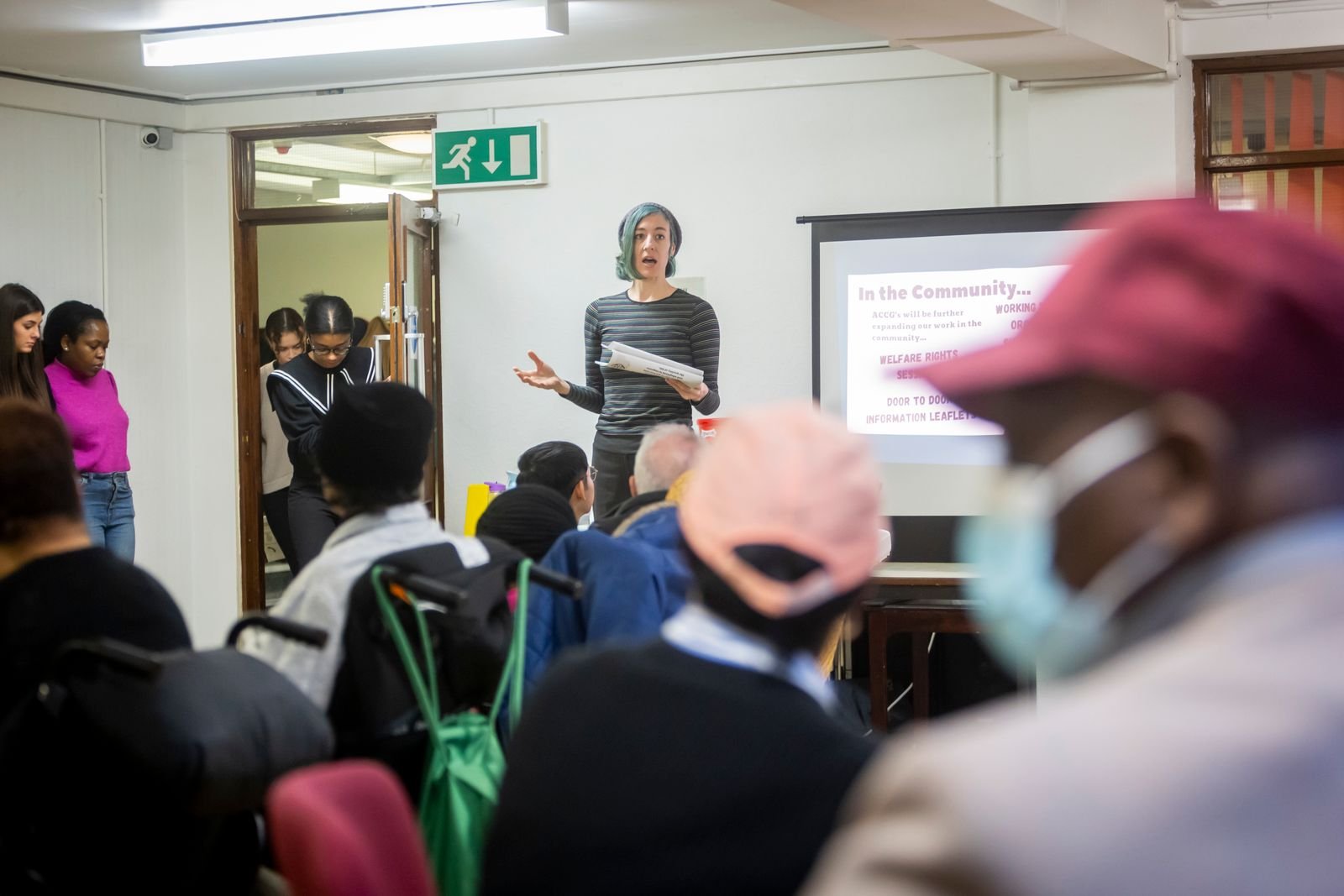
Serious violence rarely begins as violence. It begins as a dispute — over money, respect, a relationship, a rumor — that nobody had the standing, the skill, or the room to resolve. By the time an incident occurs, the conflict behind it is often weeks or months old and has passed through several hands. Conflict resolution work in Boston is fundamentally an attempt to reach that dispute earlier, when it is still a conversation.
What upstream actually means
Public safety conversations tend to focus on the moment of an incident and the response to it. That focus is understandable and insufficient, because by then most of the useful decision points have already passed.
Working upstream means intervening at the stage where a conflict is still ordinary: a landlord dispute, a falling-out between two families, a school incident that never got resolved, a young person newly isolated after a move or an expulsion. None of those situations look like public safety matters. All of them are points where a facilitated conversation costs almost nothing and a missed opportunity compounds.
This is why our programming looks, from the outside, like it is about chess boards and reading circles. Those are the settings in which a facilitator hears that two families on the same street have stopped speaking, and can offer a mediation before the disagreement acquires an audience and a set of loyalties.
The conditions that let conflict harden
Four conditions turn an ordinary dispute into something durable and dangerous.
No neutral party
When every available adult is aligned with one side, there is nobody a person can talk to without it becoming a strategic move. Neutrality is a scarce resource in a tightly connected neighborhood, and an outside facilitator supplies it.
An audience
A private disagreement can be resolved quietly. Once it is public, backing down carries a social cost, and de-escalation starts to look like defeat. Conflicts that move onto social media accelerate for exactly this reason: the audience is enormous and permanent.
No procedure
Institutions have grievance processes. Blocks generally do not. Without an agreed-upon way to raise a problem, people either swallow it — where it accumulates — or escalate to the only mechanism they can see.
Accumulated stress
Housing insecurity, food insecurity, overwork, and unaddressed trauma all lower the threshold at which an ordinary provocation produces an extraordinary response. Material stress is not an excuse for harm, but it is a real variable, and pretending otherwise leads to programs that do not work.
A neighborhood does not need more people willing to respond to violence. It needs more people positioned to hear about a conflict while it is still just a conflict.
Five pillars of community-centered engagement
1. Presence before crisis
An organization that shows up only after something terrible happens has no standing to intervene. Weekly chess nights, reading circles, and resource tables are not peripheral to violence prevention work — they are what make the prevention work possible, because they put trusted adults in regular contact with residents during ordinary weeks.
2. Accessible mediation
Free, confidential, and quick to arrange. A mediation that requires a referral, a waitlist, and a fee will not reach the dispute that matters, because that dispute will have resolved itself — one way or another — long before the intake is complete.
3. Restorative response to harm
When harm has occurred, the response determines whether the cycle continues. Exclusion without repair leaves the person harmed unaddressed and the person responsible resentful, which is the raw material of retaliation. Restorative circles put obligation and repair at the center instead.
4. Skills, taught early and often
De-escalation, active listening, and perspective-taking are teachable. Our parenting workshops, literacy circles, and youth programming all exist to build them before they are needed, which is the only time they can be built.
5. Material connection
A facilitator who cannot connect a family to food, housing, or clinical support is offering communication tools to a household whose real problem is a rent increase. Referral capacity is part of conflict resolution, not an adjacent service.
How the cycle perpetuates itself
The word cycle is used loosely in this field. Concretely, it describes several self-reinforcing loops.
Exposure to violence raises the likelihood of later involvement in it, partly through trauma responses that heighten threat perception. A young person who has learned to read ambiguity as danger will respond to a neutral situation as though it were hostile — and that response will often produce genuine hostility, confirming the original reading.
Exclusion loops operate similarly. A suspension leads to missed instruction, which leads to academic difficulty, which raises the probability of the next incident. Each turn of that loop shrinks the young person's connection to the institutions most likely to protect them.
Retaliation loops are the most visible. An unrepaired harm creates an obligation to respond, which creates a new harm, which creates a new obligation. The only reliable way to break that sequence is a process in which the original harm is genuinely addressed — which is what restorative practice attempts.
Why the messenger matters
The same intervention, delivered by two different people, produces very different results. A conversation from someone who lives three streets over, whose children attend the same school, who was present last winter and will be present next winter, carries weight that an outside professional cannot manufacture.
This is why we recruit facilitators from the neighborhoods we serve, why our youth participants move into peer coaching roles, and why we prefer to hand a practice over rather than run it indefinitely. A program that requires our permanent presence has not built anything. The measure of the work is whether a block can hold its own circle after we leave.
Measuring prevention honestly
Prevention is difficult to measure because success is the absence of an event. Attributing a non-event to a specific program is not straightforward, and organizations that claim otherwise should be read carefully.
What can be measured honestly: how many families were reached and how many returned. How many mediations were requested, completed, and resulted in a written agreement. How many agreements were still holding at the follow-up. How many referrals connected to an actual service. Whether participants report feeling heard. Whether residents bring us conflicts earlier this year than last year — which is, in our view, the single most meaningful indicator that trust is building.
Those are the numbers our board reviews. We publish what we learn, including what does not work, because a small organization's credibility is the only asset it cannot buy.
What a resident can actually do
Most people reading this are not going to found an organization. That is fine; the work does not need more organizations so much as more residents positioned to intervene early.
- Know your neighbors' names. The single most reliable predictor of whether a block handles a problem internally.
- Be the neutral party once. If two people you know have stopped speaking, offer to sit with both. You do not need a certification to ask each of them what they actually want.
- Refer early. If a family you know is stuck, tell them free mediation exists in Boston. Most people have no idea it does.
- Show up consistently. Attend the chess night, the community meeting, the reading circle. Presence is the infrastructure everything else runs on.
- Support the material fixes. Food access, housing stability, and youth employment do more for neighborhood safety than any messaging campaign.
Immediate help
This article is educational and is not emergency guidance. If someone is in immediate danger, call 911.
- 988 Suicide & Crisis Lifeline — call or text 988
- SafeLink (domestic violence) — 1-877-785-2020
- Massachusetts Behavioral Health Help Line — 833-773-2445
- Massachusetts 2-1-1 — dial 211 for housing, food, and family services
- BMC Violence Intervention Advocacy Program — support after a violent injury
- BIDMC Center for Violence Prevention and Recovery
More vetted Boston organizations are listed in our community resource directory.